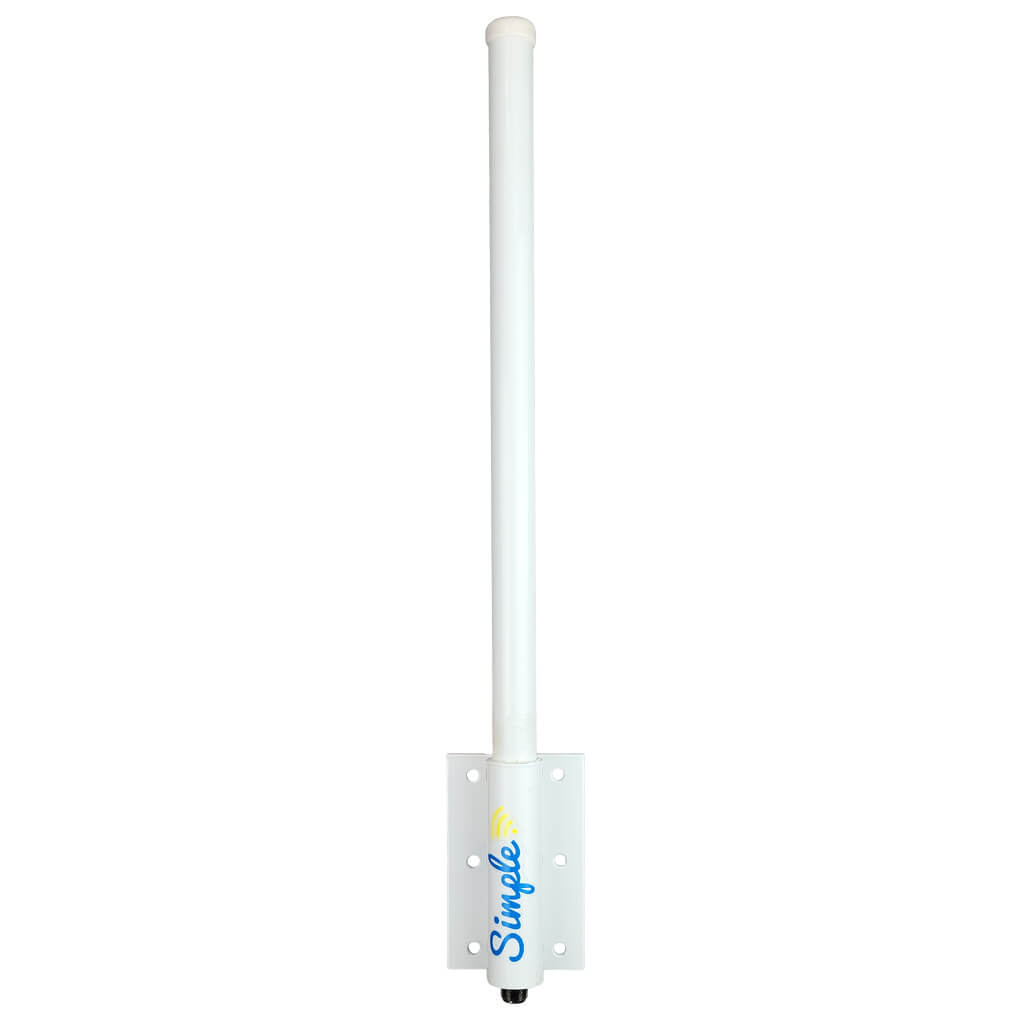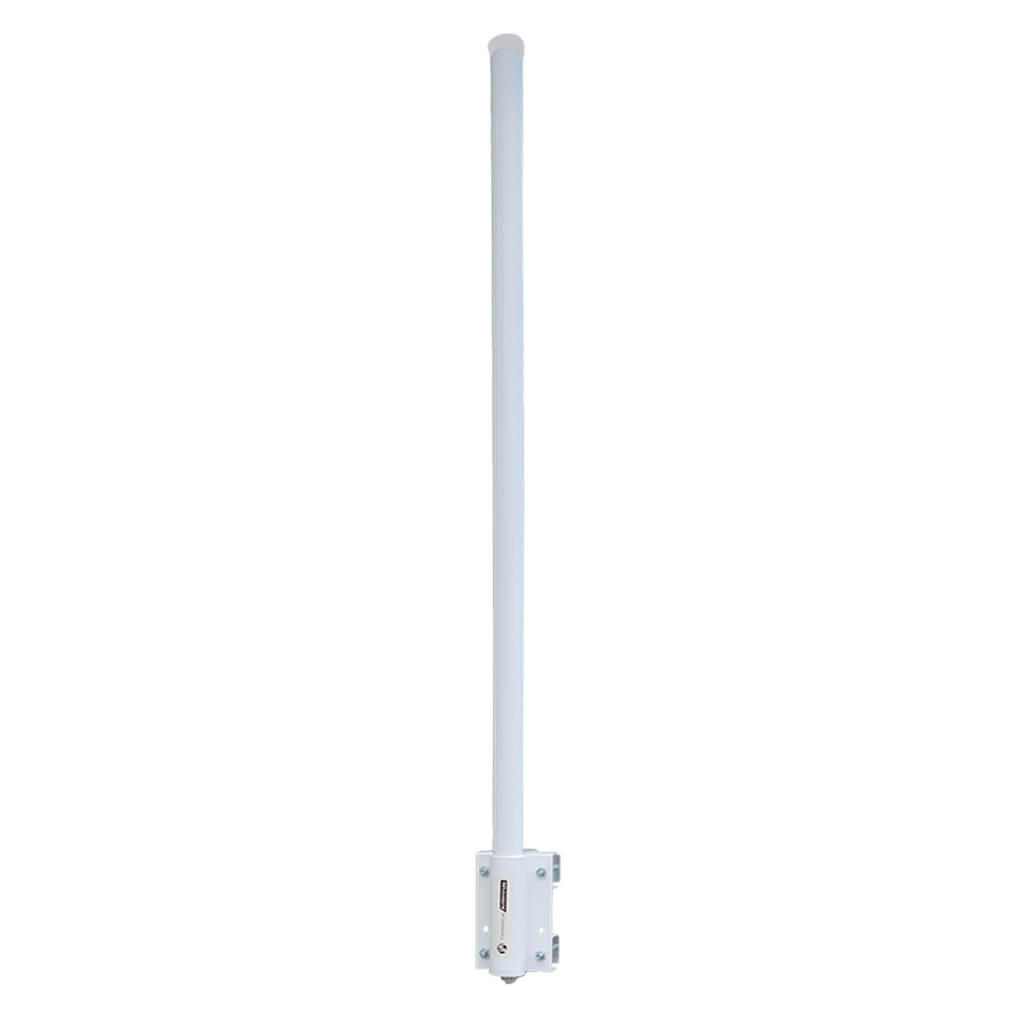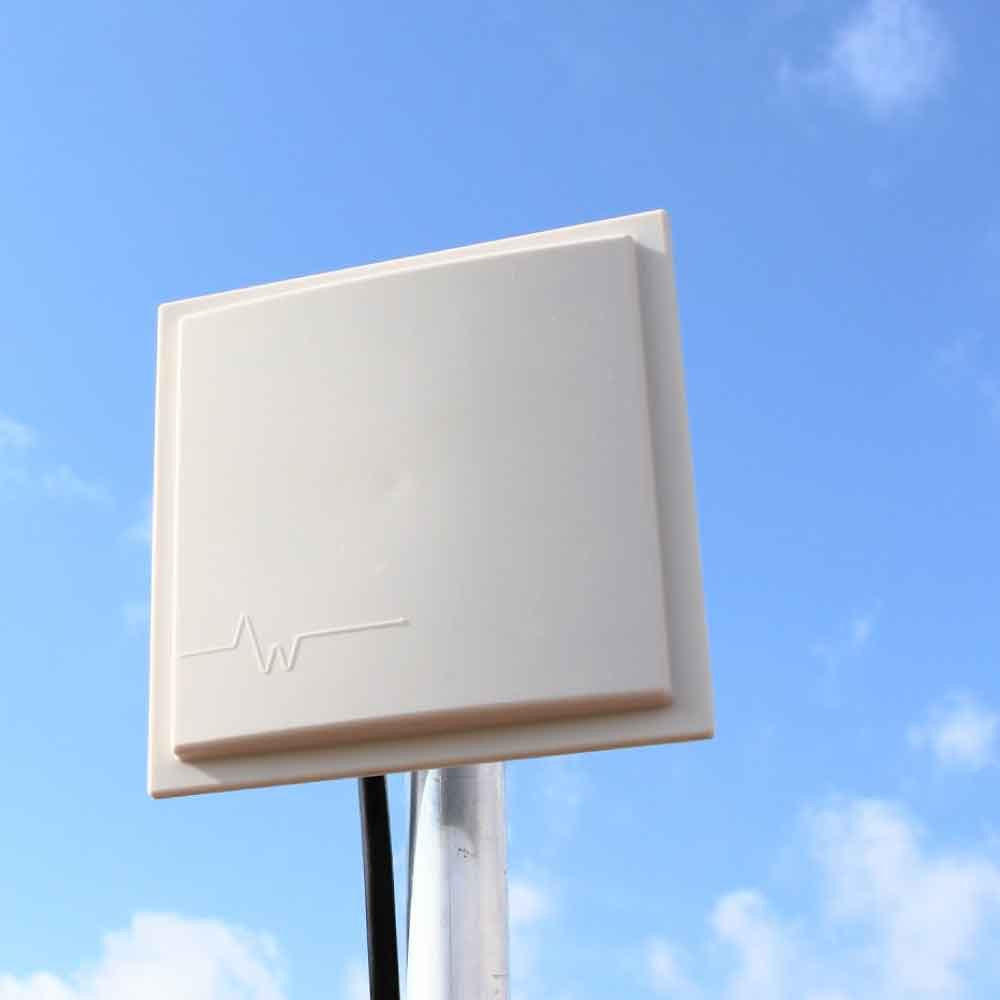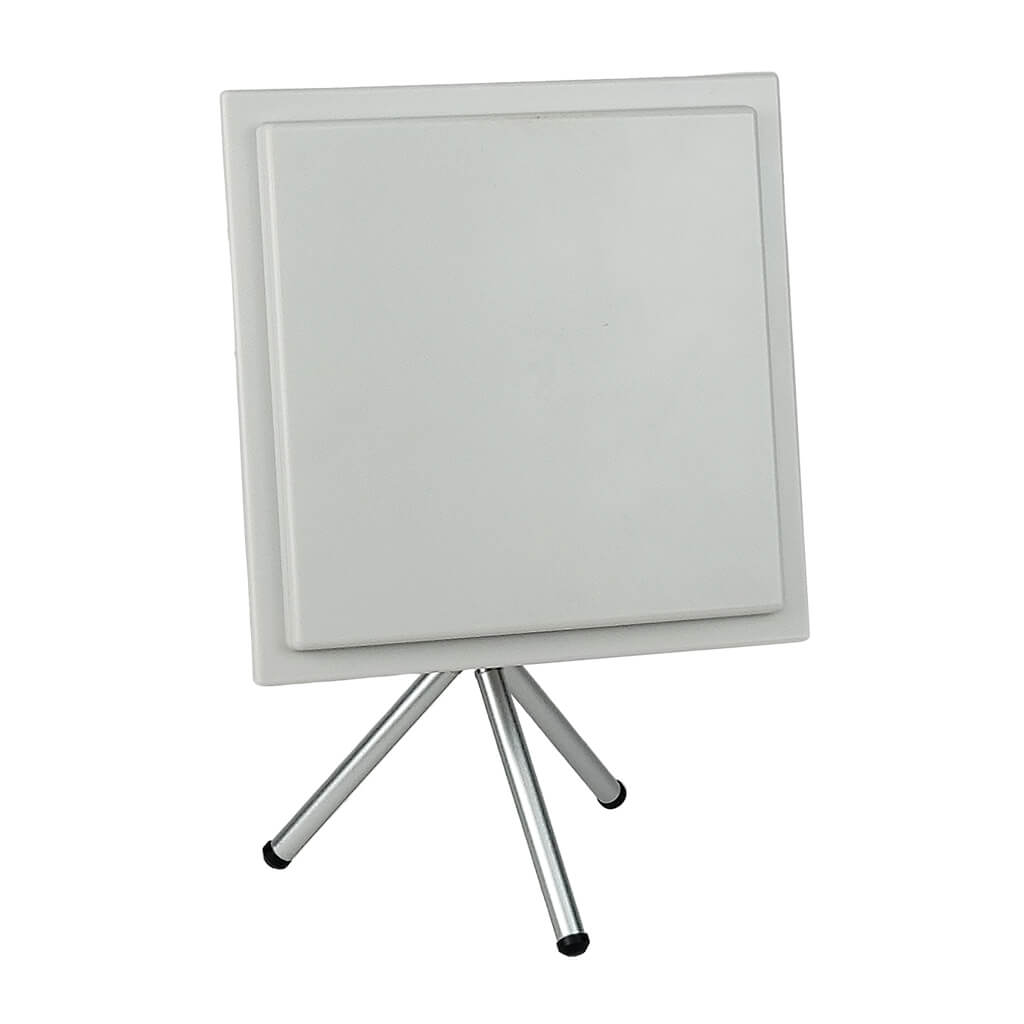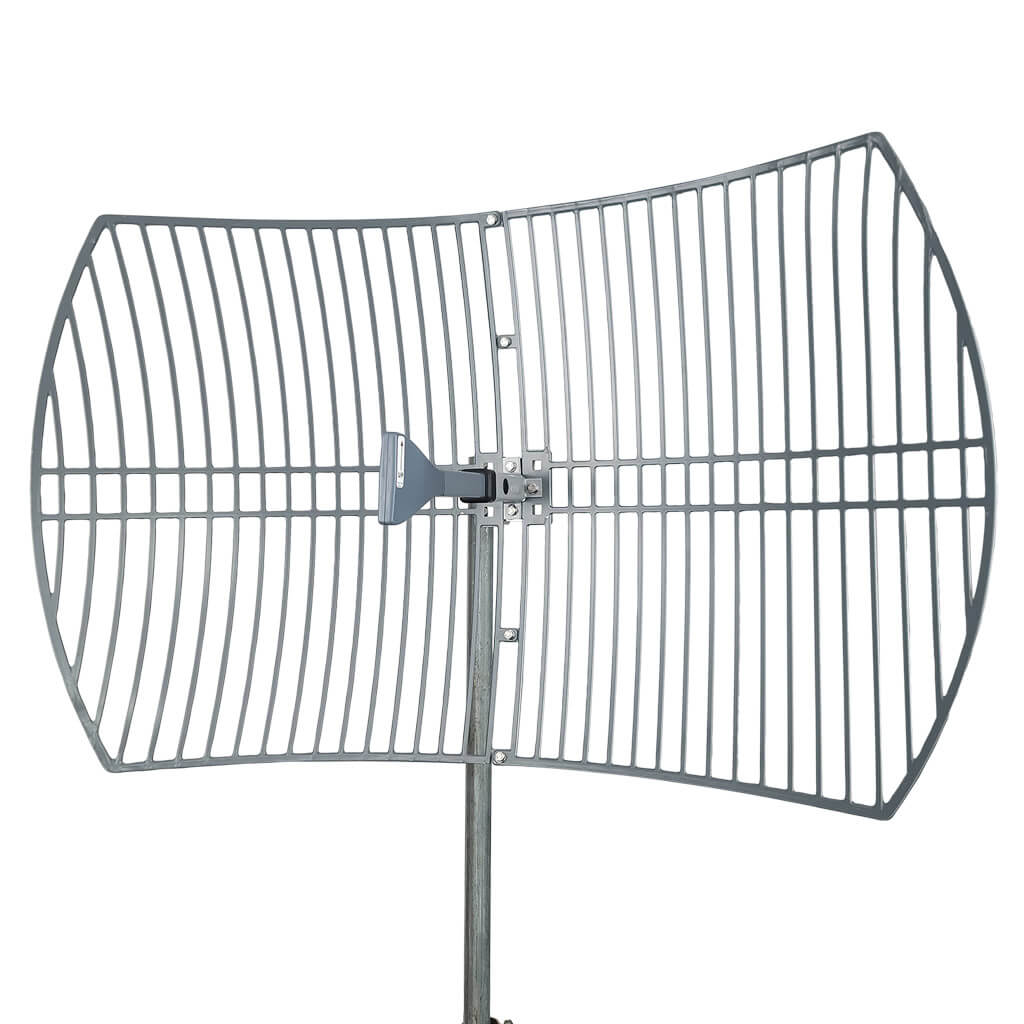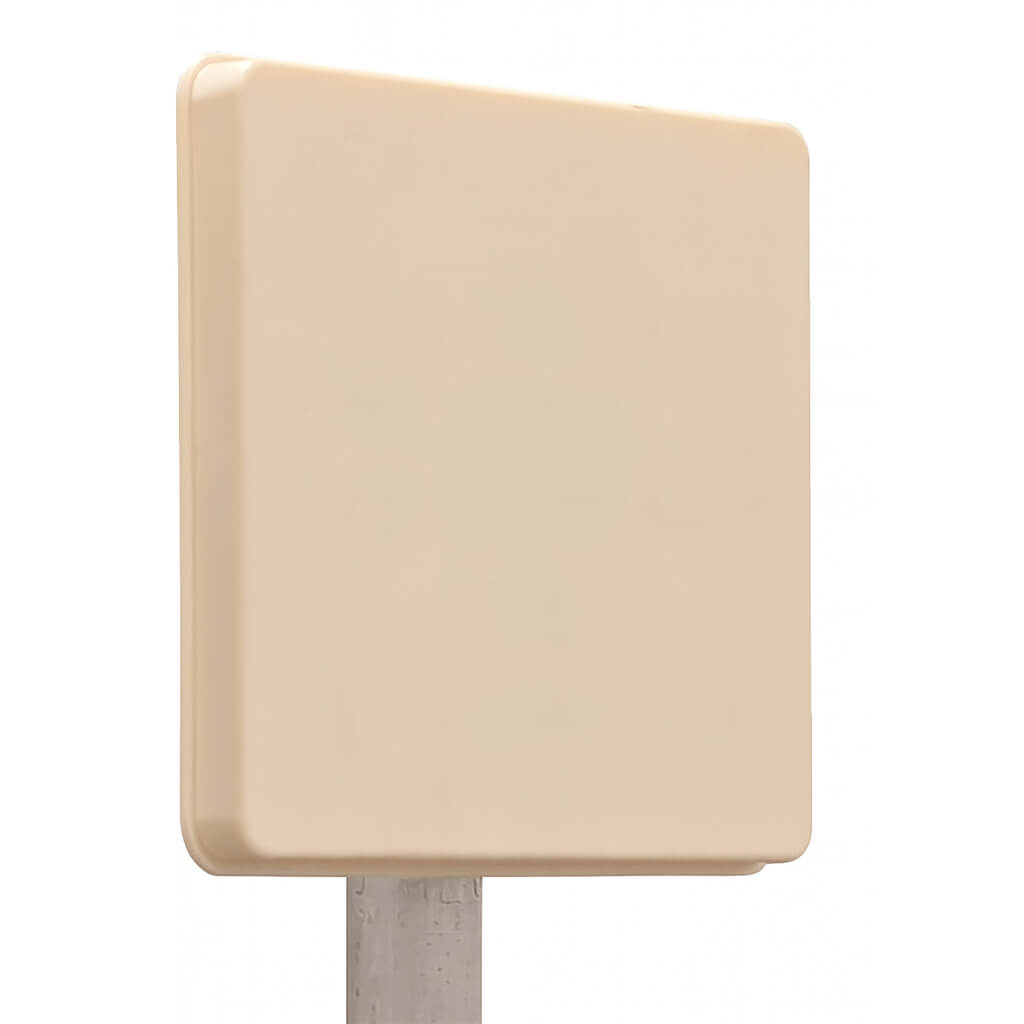
The “little brother†of our other grid antenna, this round grid has a less visual impact than our larger one with very similar results for a lower price. At 19dBi it can send and receive signals up to 6 miles away mounted up on a pole, balcony or roof of the house. A narrow beam width ensures you get more per dollar on this grid.
This Parabolic Dish antenna is a grid reflector for minimum weight and wind resistance. This grid dish represents the most signal gain and directionality in an economical priced antenna. (The next step up is 2x weight, size and cost to obtain another 3dB of gain). This antenna provides an amazing 19dBi rating (tested 18.77dBi lab at TruGain) with a very narrow pinpoint signal beam just under 13 degrees wide.
This is the antenna which can provide many miles of signal propagation (provided proper height, obstruction clearance, power and antenna on other end). This antenna has a grid made of plated steel rods then electrostatic powder coated in a light gray finish. The feedhorn arm is a 12†long support for the dipole/reflector assembly. Easy to mount on a suitable antenna mast, water pipe or other support tube. Adjustable elevation angle is possible via the U-bolt mounting system.
Model
G2419
Frequency Range
2.40-2.49GHz
Gain
19dBi Rated, 18.77dBi Actual
VSWR
1.2:1 average
Beamwidth, -3dB point Azimuth
12.7 degrees
Beamwidth, -3dB point Elevation
12.0 degrees
Cable Length, Type
10" RG-8
Connector
N-Type Female
Mounting
U-Bolts from 1" to 2" mast
Wind Rating
120 MPH
Dimensions
24" round grid
Weight
3.2 lbs (4.8 lbs boxed)
Hi! Now we’re going to talking about our 19dBi Parabolic Grid Dish.
This is a fairly popular antenna, directional antenna bars because it is priced so competitively. By itself, it will go for a less than $50. One thing to remember about this antenna, that it is 19dBi, so it is very directional. Anything outside of a 12-degree cone from the edge of this antenna, from the feed horn, you’re not going to see a signal. A common problem we get is like “You promised x amount of miles and I can’t even see anything 20ft. away...” That’s because you have to point at it, you have to be right on to it or you’re not going to see the signal at all even if it’s just to the left or the right of you.
The antenna is a grid mesh, it is meant to be mounted outdoors. It can withstand a lot; we put on a lot of things at it. We’ve actually recited to a hurricane here in South Florida and it made it through, just a couple of ding from debris, it still functions fine.
It is meant to be mounted on pole or mast, balcony even. Best case scenario with this antenna, you can get 5 miles out of it. You want to be up as high as possible. Ideally, the best cases are balconies because you are clearing over houses and trees and pointing right down at that hotspot. But if you can, pole on your roof or just the high as you can the better reception you’re going to get and better performance out of it.
So, the back of it is an N type connector and we always suggest LMR 400 cable with this type of outdoor antennas because they are the thickest cables that will reduce signal loss the most. N type, our cables come ready just for it, we have 20, 40, 60 and we could make customs above that, you have to contact us for that.
This specific cable is for a router, it’s a TNCrp, it is meant to transmit signal so, in order for the antenna to talk to a router you need the cable and right connectors. The router is going to send the signal through the cable, up the antenna, and out point it at where you want to send the signal to. If you don’t want it in a specific area and you’re not going to use it there, don’t point it, you’re not going to see a signal. You have to be within that signal cone, the radiation cone in order to get the signal, very important.
Another common kit is pairing with an Alfa or any type of USB adapter, or the b and n adapter, as long as it has an SMA connector on it. We sell the connections for that and most USB adapters on the market have the SMA so, you’re good to go with us. You’re going to be pulling-in signal from the Alfa. It’s going to be talking to the antenna, receiving signal, pointing at where the hotspot is. And then the computer receives it through the USB port. So, you’re going to be receiving signals up to 5 miles away under the best conditions, ideally. Normally, you’re going to get about 1 to 3 miles out of it because of normal suburban neighborhood and trees and interference to other signals and stuff like that. But it is a very popular antenna and we do recommend it highly especially given the price.
If you have any questions, comments, or concerns, feel free to contact us at support@simplewifi.com or call our tech line Monday thru Friday. Thanks!